Click here to go to our website.
Hello, Friends.
There are places in Indiana that are getting snow tonight. It is November, and that really is not too early for snow here in the Midwest. Bundle up! Enjoy the beautiful fluff.
Fall Foliage Field Trips, and Feasting:
November Calendar with International Friends
November 20: International Friends Feasts: bring your favorite feasting dish to share. Learn to prepare a turkey and other traditional mid-western dishes. Then let's feast!
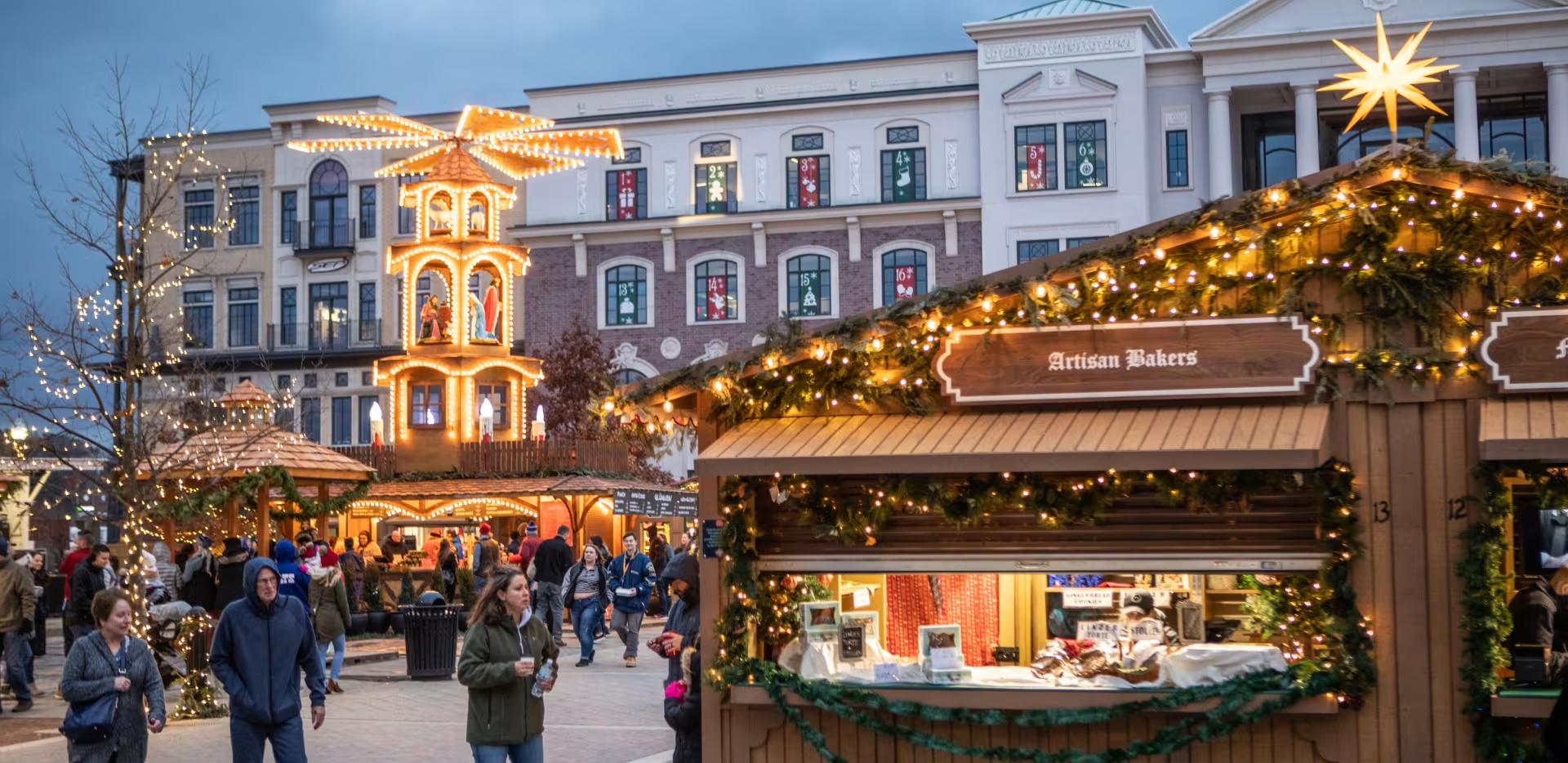
November 22 to December 24: The Carmel Christkindlmkt is open with 50 vendors, music, ice skating and just a great place to meet friends and enjoy a German-style winter/Christmas fest.
November 24-28: No meetings or classes. Happy Thanksgiving
November 27: Thanksgiving Day
November 28: Black Friday kicks off the Christmas shopping season.
Understanding the Basics
Vocabulary or words and phrases (words that when combined have a unique meaning, but when broken apart do not make much sense) and grammar are the building blocks of language. Every time you run across something new, pay attention what it is and to how it is being used.
- Personal usage: Words and phrases, and habits that are particular and unique to a person. Pay attention to understand and relate to that person. Listen to learn how to best relate to them.
- Common usage: Words and phrases and grammatical structure that are used in daily language and are widely usual and understood by most people (think broadcasters).
- Cultural usage: Words and phrases and grammatical structure that may not follow the norms.
These categories may overlap, but American English is not cut and dried (simple). Context matters. Pay attention to levels of formality to meet the expectations of the people around you and to be understood.
Don't Be Afraid: Some Tips from This Week
Expressing Fear or Concern: I’m afraid for concern or worry about others vs I’m afraid of which is personal fear or worry. Examples:
- I’m afraid of spiders. I’m afraid of flying.
- I’m afraid for my children every time they step out the door.
- I’m worried about you driving in the blizzard.
- I’m concerned about your trip.
- I'm afraid of the dark.
Use "afraid" to soften a refusal or apology: I’m afraid I can’t attend your party. I’m afraid I broke your favorite coffee cup.
Asking for help: Could you do me a favor?
Borrow=take vs lend=give
May I borrow the book from you? Could you lend me the book?
Personal Business:
You may borrow money from a bank for a car loan, a mortgage loan for a house, a home improvement loan, an educational loan, or a personal loan. A bank is a lender. You will be charged interest if you take a loan from the bank. ALWAYS ask about the interest rate and read the fine print—the terms and agreements—even if they are “boilerplate” or “standard.”
Legal Language or Legalese:
- Request documents to be translated into your own language.
- Make an informed decision.
- Appoint a Personal Health Care Representative.
- Make out a will.
- Create a living will.
- Appoint a Trustee.
- Assign Power of Attorney.
- Assign custody of minor children.
- Sign a waiver to release others from legal accountability.
- Sign medical release forms.
- Always keep a copy.
- Store documents in a safe place.
- Keep documents up-to-date.
International Friends Meeting Notes
Join us! Click here to register.
International Bible Study: Monday, 8-9:00 PM, Zoom
We wrapped up the 10 Commandments all of which deal with our relationships between ourselves and others. In heeding these commandments, we
November 10: We are discussing Exodus 21-23 read the chapters and find your favorite rules!
American English and Culture: Thursday, 9-11:00 AM, Zoom
As usual, we covered a lot of ground in class. Not to make a to-do about it, but making a difference between doing something can be huge. Make a “to-do” list to help you learn American English!

These two words begin many phrasal verbs and idioms in English. We make “things.” Use “made” for general cooking unless the manner of cooking is important. Some additional phrases: make a point, make a noise, make something for someone, make to order, make an appointment, make a mistake, make a friend. We do “activities”: exercises, chores, laundry, cleaning, dishes, presentations. Use “do” for personal hygiene and style: do your hair, make up, nails. Sometimes we do something ourselves. Other times we have someone else do something for us: “I was supposed to get my hair done once a month. She had her nails done yesterday.” Others phrases you should know: Can you do me a favor? and “What do you do (for a living)?” Answer with your job title or description: “I’m a customer service manager.”
The sounds of the day were /ng/ and /nk/:
Rhyming words and silly sentences can help you practice specific sounds. Example: They went singing and swinging through the grass in the springtime. We DO NOT hear a “hard /g/” in this sound. Listen for the same sound at the end of progressive verbs: I was gardening and cooking this afternoon. We also hear this sound at end of gerunds: Reading and writing are my favorite hobbies. Be careful not to confuse /ng/ with /nk/ as in “Drink the pink juice by the sink.” We DO hear the /k/ at the end of the word. Make some silly sentences of your own to practice challenging sounds.
November 13: Choose a favorite food or dish that you like to order in a restaurant. Practice how you would place your order in English. Then explain to us how you might say it differently in your home language. Would you use specific terms for food preparation?
American English and Culture: Thursday, 7-8:30 PM, CLC, Carmel, room 100
As we apply teamwork to tackling topics and tasks in English (vocabulary, idioms, pronunciation, grammar, usage, culture), we touch on key points and make the most of our time. Our classes are not about perfection or performance; they are about being partners in learning. Set some reachable goals for yourself. Focus on one or two items from a lesson to review and apply in your daily life each week. Check them off as you master them to build your confidence.
November 13: Choose a favorite food or dish that you like to order in a restaurant. Practice how you would place your order in English. Then explain to us how you might say it differently in your home language. Would you use specific terms for food preparation?
November 21: We will meet to learn to make some common American Thanksgiving dishes and to feast. Bring your favorite feasting dish to share. Family is welcome.
American English for Kids: Thursday, 6:00-6:30 PM, private Zoom
American Thanksgiving is a unique festival in that it not only celebrates fall harvests. It celebrates the hospitality that the Wampanoag showed to the Pilgrims that helped these settlers survive. We chatted about that during a Zoom road trip.

No comments:
Post a Comment