Click here to go to our webpages and read the Update.
Listen to our podcast "Sorry! What Did You Say?" on Spotify
Hello, Friends.
While we get focused on what is happening in our corner of the world, every once in a while, we look up and get to see something amazing. Last Thursday was one of those days. The last full moon of the year, the Cold Moon was a super moon (the moon's orbit was close to the earth). It was a beautiful sight worth stopping for and appreciating. To make it better, friends and family throughout the world were all treated to the same spectacular view and wanted to share the moment through conversation and pictures. We do not always get to enjoy the same holiday, weather, news, or more, but we do get to share a beautiful moon!
Christmas Traditions
Regardless of where you are from, it is hard not to get into the spirit of Christmas. In the United States, we anticipate this holiday with joy as well as anxiety. People are so excited to celebrate together, but then again, all the planning and schedules and to do lists can make people nervous.
Christmas is both a religious and secular holiday in the United States.
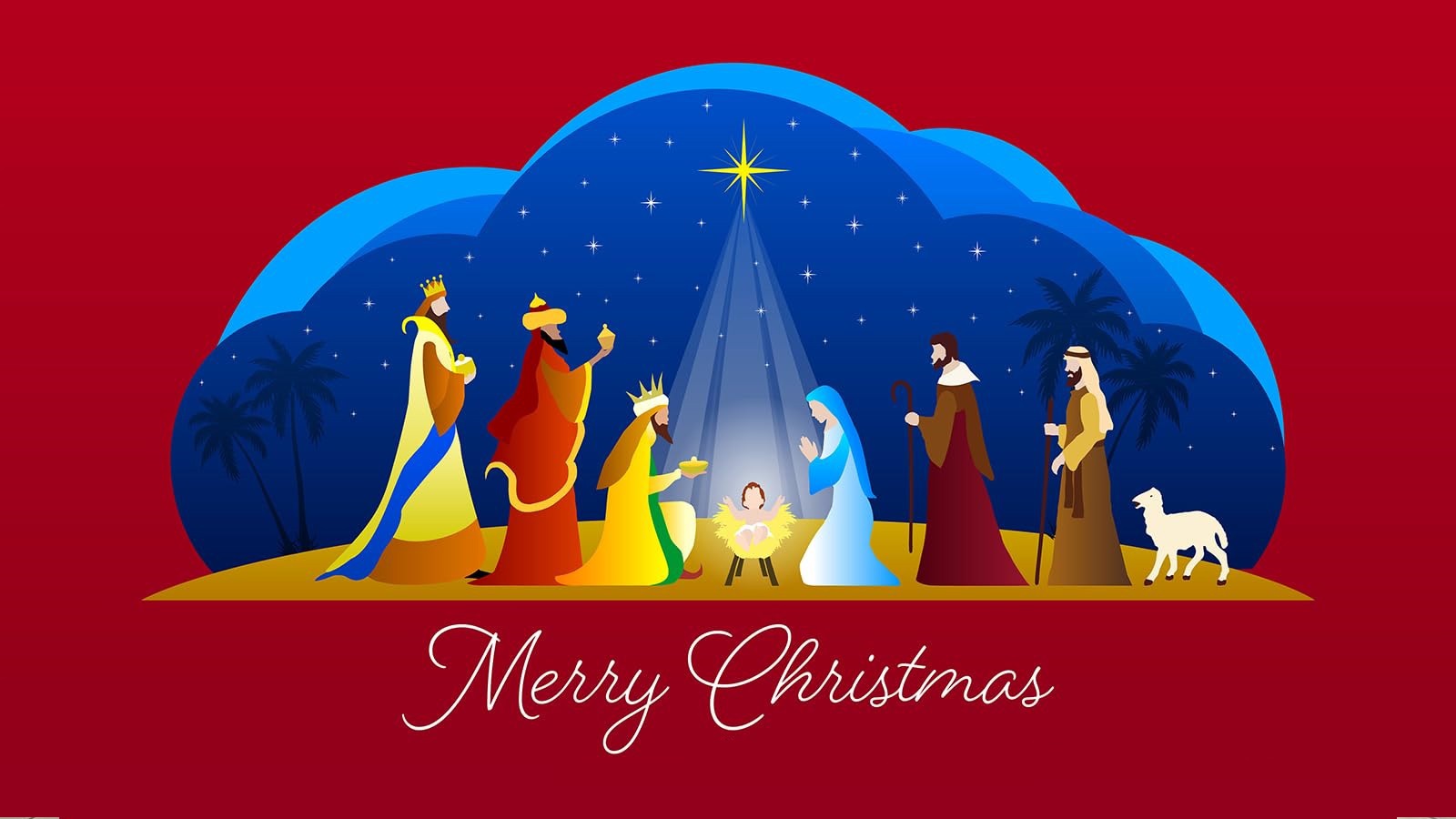
For Christians, it is the celebration of the birth of Jesus: Son of God and son of man. Prayers, songs, and decorations a part of this celebration that begins with Advent. The nativity is a beautiful symbol of the season. Living nativities are popular. Some families (and churches) do not place the baby Jesus in the manger until Christmas Eve. Many people have never heard the original story of Christmas. The story is told in the four Gospel the books in the New Testament of the Bible. The Old Testament prophets also predicted Jesus' birth. The Nativity Christmas Bible Story: The Birth of Jesus Christ is a great article that quotes the story. You are warmly welcome to visit a church for Christmas Services. Here is the link sponsor Cornerstone Lutheran Church for times and various events.

Christmas is a secular celebration of family and friends. Santa and his reindeer. Holiday movies about homecoming. Wonder. Peace. Joy. Homes are decorated with lights and large inflatable popular characters of the season (Grinch, Santa, reindeer, snowmen, Peanuts characters, etc.) There are holiday variety shows, concerts, plays, performances, parades, pageants, and open houses. Mini-festivals pop up at the different shopping centers and malls with photo ops with Santa or other popular Christmas characters. People gather and celebrate. Join in!
Shopping
Shopping is an important part of the season. It is fun to find treasures for loved ones, gift exchanges, or just to see the sights. Listen to our "Sorry. What Did You Say?" podcast conversation about shopping on Spotify.
What kind of learner are you?
Knowing how you learn best can lead you to the most helpful tools and interactions. Learning styles include:
- Visual Learner: look for visual information including charts, diagrams, etc. and use color coding and images
- Auditory Learner: lectures, discussions, audio materials and benefit from verbal instructions and storytelling
- Reading/Writing Learner: prefers written words and use lists, notes, written explanations
- Kinesthetic Learner: enjoys hands-on, experimenting, role-playing and benefit from interactive methods and even how-to videos
- Logical Learner: appreciates structured and logical approaches and enjoy problem-solving and understanding the principles behind the learning
- Social Learner: thrives in group and collaborative experiences and benefit from group discussions, projects, and interactions
- Solitary Learner: studies alone and engage in self-directed learning and direction
What tools help you learn language? Studying grammar, listening to podcasts, taking notes, watching YouTube, immersing yourself in daily life and learning “the hard way,” watching movies with or without subtitles are just a few of the ideas we use,
Often what is being learned can be best learned by a non-preferred method. For example, when working on pronunciation or language cadence, an auditory approach is best even if it may not be a favorite. Watch for
How you think is another consideration. This is a fun little video on how people think.
American Language
I used to or I did not use to. What difference does it make?
The d and t sounds in used to are blended into a single consonant sound (leaning into the t in to). The sound of use to and used to is identical. It is only in writing where mistakes can be made.
We say "used to" when talk about habits or repeated actions in the past that we do not do in the present:
- I used to make long lists of vocabulary words, but now I try to use a few at a time until I learn them.
- I used to live in Michigan before I moved to Indiana.
- He used to play soccer, but now he enjoys golf.
- She used to be a teacher before she went to law school.
- She used to go running every day before she injured her knee.
The question form and negative form look a bit different. Notice the “d” is absent, creating “use to” instead of “used to”:
- I used to be afraid to speak English, but I learned to be confident and comfortable.
- Where did you use to live?
- Did he use to study English before he got a full-time job?
- I didn’t use to like spinach, but now I eat it often.
- Did he use to visit the library once a week?
Let’s take a break (and other phrases with “take”)
We have many expressions with “take” in English. Do you know these: take a shower, take a nap, take a trip, take your turn, take notes, take advice, take a class, take your time, take medicine, take a breath, take a look at, take a picture, take a risk, take the lead, take your time, take a test, take an interest in? Can you add to the list? Be careful. We DO NOT say take breakfast/lunch/dinner/coffee. We use “have” or “eat” or “get” for meals and beverages.
International Friends Meeting Notes
Some of our students are working out of town and cannot always make or evening meeting. We are trying setting up a concurrent Zoom to loop everyone into the meeting. Look for the e-mail. Even if you do not regularly come to this class, you are welcome to be a part of this hybrid experiment.
December 1: We continue to read the Letter to the Hebrews with chapter 7.
American English and Culture: Thursday, 10:00 AM- 12:00 PM, Zoom
After our Thanksgiving break, we had fun using different verb tenses to talk about where we went and what we did in recent weeks. Do not stumble over “the right” verbs to users you tell your story. Language is so much more than words and rules. You do not have to identify or label your conversation with grammar terms. Instead, do your best to enjoy the flow of conversation. Keep it simple. Mirror the structures you hear in questions you are asked to form your answer. Allow native English speakers to partner with you as you learn and find joy in the language journey. Avoid perfectionism (comparing yourself to someone else) and strive for excellence (making an earnest effort to learn and grow). Self-motivation and a positive attitude will help you make the most of your learning style and tools.
December 11: Bring a list of seasonal greetings. What phrases do people say to show warmth and friendship during the winter holidays? What American holiday traditions are you curious about? Share something about your own holiday traditions.
Join us back on Zoom after Thanksgiving Break in the jolly month of December. Share your holiday adventures. We will start with the short announcement about the Santa Tours in Carmel. Here are three sources of information about the event to compare and contrast:
American English and Culture: Thursday, 7-8:30 PM, CLC, Carmel, Room 102
December 8: Join us at Cornerstone Lutheran Church. We are going to talk about interviews and getting a job. What do you need to know? How do you talk?
American English for Kids: Thursday, 6:00-6:30 PM, private Zoom
We share vacation adventures. An overnight trip on the weekend makes for a great get-away and recharge. Adding side trips either going or coming from a destination not only breaks up the drive, but makes the vacation more memorable.
December 12: We will share what is going on in our countries in anticipation of Christmas.
Words and Phrases and Resources
anticipation of; looking forward to something
blended: combined
but then again: a phrase to introduce new information
get into: become involve in or to grow an interest in
get to: are allowed
in our corner of the world: narrow focus
look up: change your focus
make it better: improve the situation
memorable: worth remembering
non-preferred: something that is not preferred; "non" in the beginning of a word indicates that the idea goes in another direction (nonsensical=does not make sense; nondescript=plain)
one of those days: the usual meaning is a day when most things go wrong; what makes this phrase different this time? This is your hidden quiz!
stumble over: to have difficulty saying something (trip over your words)