Friday, December 12, 2025

Traditions of the Season and Winter Safety

Click here to go to our webpages and read the Update. Look at notes and boards.

Listen to our podcast "Sorry. What Did You Say?" on Spotify

Hello, Friends.

Look out for the snowfall on the weekend here in the Midwest. Snow. Blowing snow. Bitter cold. Windchills. Hang in there...by the mid to end of next week temperatures will spike back up into the 40s. Remember. In the United States we use Fahrenheit. Great news! It is still the autumn season! Winter officially begins Saturday, December 21 which is the solstice.

When temperatures drop, leave sink and bath water faucets dripping and cabinet doors open if the water pipes are in a wall so your pipes do not freeze. Leave your furnace on set at 62F if you leave town to protect your pipes and property. Pipes can burst and water can flood you home until you return.

Seasonal Food Traditions

The dessert, snack, meal of choice during the holiday season is cookies! Cakes are always welcome, but Christmas celebrations and lore include cookies. Nothing warms the day like a cookie. It is fun to get together and make memories with cookie making parties. A cookie walk is when friends bake a big batch of cookies. This is a popular community fundraiser where people bake and donate cookies and other treats. Choose one or two or a whole batch to create a custom cookie stash! The stars of the season:

  • Candy canes 
  • Gingerbread
  • Hot chocolate (with marshmallows)
Other treats included fruit and nuts. Children were given oranges or nuts.

Every family serves favorites for the holiday meals. Some might have a big roast: ham, turkey, rib roast. Other families prefer ethnic favorites like pasta dishes, rice dishes, curries. Some families cook fish dishes. Families mix it up!

People may leave town and visit family, or they may take a trip to a warm destination. There is so much to see and experience.

Shopping 

Shopping is an important part of the season. It is fun to find treasures for loved ones, gift exchanges, or just to see the sights. Listen to our "Sorry. What Did You Say?" podcast conversation about shopping on Spotify as well as our conversation on please and thank you which is about to come out.

Winter Safety

Community expectations during the winter season include looking out for our neighbors. Many cities and towns have regulations for keeping the public walks clear of snow and ice. This is the responsibility of the property owners.


Lights of the Season

The Jewish eight-day festival of lights or Hannukah begins December 14. This holiday follows the lunar calendar. This  Happy Hannukah is the greeting. Families light a candle in the menorah (a candelabra). Gifts are given. Games are played. Songs are sung. Read more about this holiday.
Christians countdown to Christmas with an Advent Wreath. There are four candles. Each candle can be named hope, peace, joy or prophet, Bethlehem, shepherd. Devotions and prayers to remember or to teach the story of Jesus' coming are told.

Candlelight Concerts in Indianapolis are a big hit of the season. 
The Scottish Rite Cathedral is a recommended favorite.

International Friends Meeting Notes: One More Class Before Break

Some of our students are working out of town and cannot always make or evening meeting. We are trying setting up a concurrent Zoom to loop everyone into the meeting. Look for the e-mail. Even if you do not regularly come to this class, you are welcome to be a part of this hybrid experiment.

Join us! Click here to register.

International Bible Study: Monday, 8-9:00 PM, Zoom

Wow! An amazing session. There is so much in these chapters to unpack. We were able to spot so many meaningful verses. In addition, the author does a fantastic job referring his readers back to the Old Testament heroes to spark understanding of his point.

December 1: We continue to read the Letter to the Hebrews with chapter 7.

American English and Culture: Thursday, 9:00AM- 11:00 AM, Zoom

We had a great conversation about how Christmas is celebrated in our home countries. In many countries Christmas is a religious celebration and has many traditions that are family centric, community centric, and religious customs and practices.

We enjoyed generating phrases that ended with a preposition. The lists are in the chat.
 
December 18:  End the year with a virtual cookie party. Take your laptop to the kitchen and have a bake-along. Check out our favorite recipes and whip up a batch or two.

American English and Culture: Thursday, 7-8:30 PM, CLC, Carmel, Room 102


We had a hardworking evening. Check the Class Notes page to see the boards. We took our conversation sentences and went after them to discover errors. Most of the errors came from misplaced prepositions. These little words are always throwing a wrench in our stories. We also had fun recognizing words that become confusing to listeners when pronunciation is flipped like kitchen/chicken. The subtle tongue placement for the /k/ and /tʃ/ (ch) sounds can be tricky, especially for speakers from languages without these distinct sounds. There is also the association...we prepare and eat chicken in the kitchen (not kitchen in the chicken).


December 18: 
  • Bring you preposition lists matching to who, what, where, when, why, and how. Try without a list first. Go crazy and use this list. Preposition List: No Singing
  • Bring your "I'm From" personal and professional sheets filled in.
  • Email Carolyn your resume and the job description.

American English for Kids: Thursday, 6:00-6:30 PM, private Zoom

No Meeting....

December 18:  Be ready to talk about what you learned instead of coming to our meeting...

Words and Phrases and Resources

batch (of cookies): 
become confused: when something that seems reasonable is not 
big hit: popular
looking out for: taking care of
lore: stories and traditions that are passed along via stories and actions
officially: 
unpack: take apart
spark: instigate
throwing a wrench: causing a problem

Sunday, December 7, 2025

Year End Countdown

Click here to go to our webpages and read the Update.

Listen to our podcast "Sorry. What Did You Say?" on Spotify

Hello, Friends.

While we get focused on what is happening in our corner of the world, every once in a while, we look up and get to see something amazing. Last Thursday was one of those days. The last full moon of the year, the Cold Moon was a super moon (the moon's orbit was close to the earth). It was a beautiful sight worth stopping for and appreciating. To make it better, friends and family throughout the world were all treated to the same spectacular view and wanted to share the moment through conversation and pictures. We do not always get to enjoy the same holiday, weather, news, or more, but we do get to share a beautiful moon!

Christmas Traditions

Regardless of where you are from, it is hard not to get into the spirit of Christmas. In the United States, we anticipate this holiday with joy as well as anxiety. People are so excited to celebrate together, but then again, all the planning and schedules and to do lists can make people nervous.

Christmas is both a religious and secular holiday in the United States.

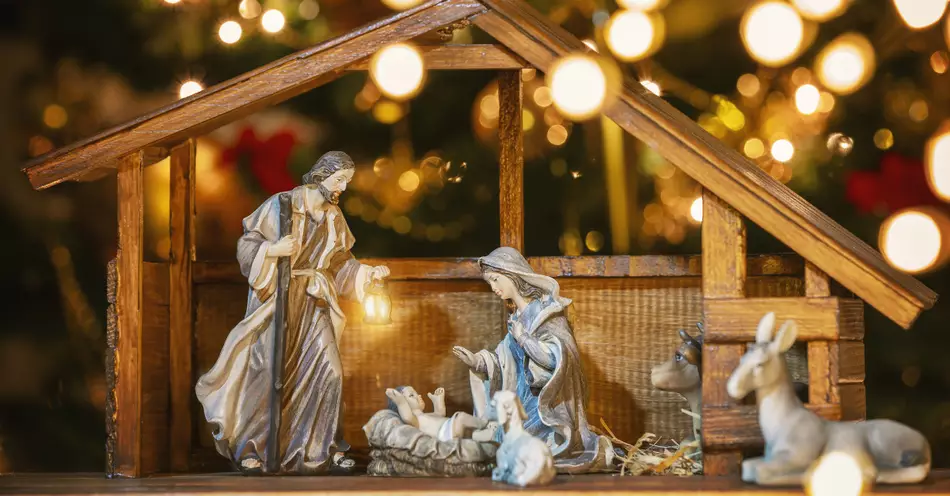
For Christians, it is the celebration of the birth of Jesus: Son of God and son of man. Prayers, songs, and decorations a part of this celebration that begins with Advent. The nativity is a beautiful symbol of the season. Living nativities are popular. Some families (and churches) do not place the baby Jesus in the manger until Christmas Eve. Many people have never heard the original story of Christmas. The story is told in the four Gospel the books in the New Testament of the Bible. The Old Testament prophets also predicted Jesus' birth. The Nativity Christmas Bible Story: The Birth of Jesus Christ is a great article that quotes the story. You are warmly welcome to visit a church for Christmas Services. Here is the link sponsor Cornerstone Lutheran Church for times and various events. 
Christmas is a secular celebration of family and friends. Santa and his reindeer. Holiday movies about homecoming. Wonder. Peace. Joy. Homes are decorated with lights and large inflatable popular characters of the season (Grinch, Santa, reindeer, snowmen, Peanuts characters, etc.) There are holiday variety shows, concerts, plays, performances, parades, pageants, and open houses. Mini-festivals pop up at the different shopping centers and malls with photo ops with Santa or other popular Christmas characters. People gather and celebrate. Join in!

Shopping 

Shopping is an important part of the season. It is fun to find treasures for loved ones, gift exchanges, or just to see the sights. Listen to our "Sorry. What Did You Say?" podcast conversation about shopping on Spotify.

What kind of learner are you?

Knowing how you learn best can lead you to the most helpful tools and interactions. Learning styles include:

  • Visual Learner: look for visual information including charts, diagrams, etc. and use color coding and images
  • Auditory Learner: lectures, discussions, audio materials and benefit from verbal instructions and storytelling
  • Reading/Writing Learner: prefers written words and use lists, notes, written explanations 
  • Kinesthetic Learner: enjoys hands-on, experimenting, role-playing and benefit from interactive methods and even how-to videos
  • Logical Learner: appreciates structured and logical approaches and enjoy problem-solving and understanding the principles behind the learning
  • Social Learner: thrives in group and collaborative experiences and benefit from group discussions, projects, and interactions
  • Solitary Learner: studies alone and engage in self-directed learning and direction

What tools help you learn language? Studying grammar, listening to podcasts, taking notes, watching YouTube, immersing yourself in daily life and learning “the hard way,” watching movies with or without subtitles are just a few of the ideas we use,

Often what is being learned can be best learned by a non-preferred method. For example, when working on pronunciation or language cadence, an auditory approach is best even if it may not be a favorite. Watch for 

How you think is another consideration. This is a fun little video on how people think.

American Language

I used to or I did not use to. What difference does it make?

The d and t sounds in used to are blended into a single consonant sound (leaning into the t in to). The sound of use to and used to is identical. It is only in writing where mistakes can be made.

We say "used to" when talk about habits or repeated actions in the past that we do not do in the present: 

  • I used to make long lists of vocabulary words, but now I try to use a few at a time until I learn them. 
  • I used to live in Michigan before I moved to Indiana. 
  • He used to play soccer, but now he enjoys golf. 
  • She used to be a teacher before she went to law school. 
  • She used to go running every day before she injured her knee.
The question form and negative form look a bit different. Notice the “d” is absent, creating “use to” instead of “used to”:
  • I used to be afraid to speak English, but I learned to be confident and comfortable.
  • Where did you use to live?
  • Did he use to study English before he got a full-time job?
  • I didn’t use to like spinach, but now I eat it often.
  • Did he use to visit the library once a week?
Let’s take a break (and other phrases with “take”)

We have many expressions with “take” in English. Do you know these: take a shower, take a nap, take a trip, take your turn, take notes, take advice, take a class, take your time, take medicine, take a breath, take a look at, take a picture, take a risk, take the lead, take your time, take a test, take an interest in?  Can you add to the list? Be careful. We DO NOT say take breakfast/lunch/dinner/coffee. We use “have” or “eat” or “get” for meals and beverages.


International Friends Meeting Notes

Some of our students are working out of town and cannot always make or evening meeting. We are trying setting up a concurrent Zoom to loop everyone into the meeting. Look for the e-mail. Even if you do not regularly come to this class, you are welcome to be a part of this hybrid experiment.

Join us! Click here to register.

International Bible Study: Monday, 8-9:00 PM, Zoom

We reviewed our study in light of how the writer of Hebrews structures his letter to the Jewish people. 

Who Was Melchizedek in the Bible? His Story and Importance to Jesus | Bible Study Tools

December 1: We continue to read the Letter to the Hebrews with chapter 7.

American English and Culture: Thursday, 10:00 AM- 12:00 PM, Zoom

After our Thanksgiving break, we had fun using different verb tenses to talk about where we went and what we did in recent weeks. Do not stumble over “the right” verbs to users you tell your story.  Language is so much more than words and rules. You do not have to identify or label your conversation with grammar terms. Instead, do your best to enjoy the flow of conversation. Keep it simple. Mirror the structures you hear in questions you are asked to form your answer. Allow native English speakers to partner with you as you learn and find joy in the language journey. Avoid perfectionism (comparing yourself to someone else) and strive for excellence (making an earnest effort to learn and grow). Self-motivation and a positive attitude will help you make the most of your learning style and tools.
 
December 11:  Bring a list of seasonal greetings. What phrases do people say to show warmth and friendship during the winter holidays? What American holiday traditions are you curious about? Share something about your own holiday traditions.

Join us back on Zoom after Thanksgiving Break in the jolly month of December. Share your holiday adventures. We will start with the short announcement about the Santa Tours in Carmel. Here are three sources of information about the event to compare and contrast:

American English and Culture: Thursday, 7-8:30 PM, CLC, Carmel, Room 102


December 8: Join us at Cornerstone Lutheran Church. We are going to talk about interviews and getting a job. What do you need to know? How do you talk?

American English for Kids: Thursday, 6:00-6:30 PM, private Zoom

We share vacation adventures. An overnight trip on the weekend makes for a great get-away and recharge. Adding side trips either going or coming from a destination not only breaks up the drive, but makes the vacation more memorable

December 12:  We will share what is going on in our countries in anticipation of Christmas.

Words and Phrases and Resources

anticipation of; looking forward to something
blended: combined
but then again: a phrase to introduce new information 
get into: become involve in or to grow an interest in
get to: are allowed
in our corner of the world: narrow focus
look up: change your focus
make it better: improve the situation
memorable: worth remembering
non-preferred: something that is not preferred; "non" in the beginning of a word indicates that the idea goes in another direction (nonsensical=does not make sense; nondescript=plain)
one of those days: the usual meaning is a day when most things go wrong; what makes this phrase different this time? This is your hidden quiz!
stumble over: to have difficulty saying something (trip over your words)

Sunday, November 30, 2025

Winter Wonderland and Welcome Back

Click here to go to our webpages and read the Update.

Listen to our podcast "Sorry. What Did You Say?" on Spotify

Hello, Friends.

Did you get to walk in the winter wonderland? Winter storms make the holiday season all the more festive. Safe travels and see you this week in person and on Zoom!

Holiday Highlights

There are so many fun holiday events hosted by our communities. Here is one that is hosted in Carmel. Read the article and spot phrases. Churches and communities offer opportunities to enjoy the traditions of the season.

The Nutcracker is a beloved holiday tradition. Local libraries are offering a sample of the classic ballet. Performances at Carmel Clay Library

Cornerstone Lutheran Christmas Concert launches the holiday season with classic and modern Christmas music. Enjoy Christmas cookies and hot chocolate.

Christmas Traditions

There are so many traditions that make the season beloved. Christmas is celebrated in the United States as both a religious and a secular holiday. 

Secular features include: visits with Santa, elves, Nutcracker performances, gift exchanges, holiday greetings, holiday parties, movies, decorations. cookies, candy canes, bazaars, decorated trees.

Churches offer concerts, advent services, nativity stories, and special services.

International Friends Meeting Notes

Some of our students are working out of town and cannot always make or evening meeting. We are trying setting up a concurrent Zoom to loop everyone into the meeting. Look for the e-mail. Even if you do not regularly come to this class, you are welcome to be a part of this hybrid experiment.

Join us! Click here to register.

International Bible Study: Monday, 8-9:00 PM, Zoom

We are reading the letter to the Hebrews. This is a great complement and counterpoint to our study of Exodus. The author introduces many topics that would be familiar to the Hebrews. The structure and development of the concepts in this letter are interesting Notice how the author is building concepts and ideas in chapter. Notice how the author refers to common stories, music, and history to present ideas and underscore the intended focus and direction.

  • Hebrews 1 tells who Jesus is. That Jesus is the Son of God, higher than the angels, creator, and savior who sits at the right hand of God. Much of this chapter refers to beloved books of the Jewish Torah and refer to the prophets and psalms that foretold his coming.
  • Hebrews 2 builds to describe the love that Jesus has for people and how he is not ashamed of them but call them brothers and sisters. He fulfills and saves.
  • Hebrews 3 retells about Moses (the great tie to Exodus) and warns the Hebrews to look to Jesus and not doubt him or his teaching, but to turn to him.
  • Hebrews 4 focuses on Sabbath rest to be sure that people take the time to be renewed.
  • Hebrews 5 is for the priests and leaders to grow and teach and not to be complacent, but to mature in their knowledge and understanding to grow in their relationship with God and to lead others to do likewise.

December 1: We continue to read the Letter to the Hebrews.

American English and Culture: Thursday, 9:00 AM- 11:00 PM, Zoom

December 4:  Join us back on Zoom after Thanksgiving Break in the jolly month of December. Share your holiday adventures. We will start with the short announcement about the Santa Tours in Carmel. Here are three sources of information about the event to compare and contrast:

American English and Culture: Thursday, 7-8:30 PM, CLC, Carmel, Room 102


December 4: Join us at Cornerstone Lutheran Church. We are going to talk about interviews and getting a job. What do you need to know? How do you talk?

American English for Kids: Friday, 6:00-6:30 PM, private Zoom

Share vacation adventures.

December 5:  Write a couple of paragraphs telling about Japanese agriculture. This is not a research project, but a reflection or opinion piece.

Words and Phrases and Resources

compare: notice similarities and differences
complement: something that completes or brings something to perfection
contrast: notice differences
counterpoint: opposing view
loop in: communicate to people to connect them 
underscore: emphasize

Tuesday, November 25, 2025

Happy Thanksgiving


Best wishes to you and your family for Thanksgiving. 


We are thankful for you!


Listen to the first episode of the podcast Sorry. What Did You Say? on Spotify to learn more about what to expect and how people celebrate Thanksgiving.

Sunday, November 23, 2025

Thanksgiving Break and Welcome December

Click here to go to our webpages and read the Update.

Hello, Friends.

We celebrated our Thanksgiving feasts. Every year we are happy and so very thankful for the opportunity to meet together, learn together, share our lives together. 

Find Thanksgiving Recipes at the top of our page and cook the dishes we practiced.

Each of our events was excited and thankful that they did not have to wait four to five hours for our turkey to bake!

We prepared and served four turkeys. Not all of the turkeys were enjoyed by our classes. We showed hospitality to the Tomodachi club (a Japanese and American club that meets once a month) and the Indy Taiji Club (that meets 9-10:00 AM at Cornerstone Lutheran Church on Saturday).

We hope that you enjoy your Thanksgiving and that it is filled with hospitality, feasting, friendship, and the blessings of the holiday.


Holiday Highlights

There are so many fun holiday events hosted by our communities. Here is one that is hosted in Carmel. Read the article and spot phrases.

CARMEL, Ind., Nov. 19, 2025 - Mark your calendars as Santa returns to Carmel this holiday season with his friends from the Carmel Fire, Police and Street departments. The tours will begin Sunday, Nov. 23 and include 10 dates with 10 different routes through Sunday, Dec. 14. Each tour time will be from 5-8 p.m. on Sundays, Wednesdays and Fridays. 

Santa Tours will also incorporate senior living facilities, schools and parks for those who don't live along one of the neighborhood routes. 

Keep an eye out for Santa, his friends and even some surprise guests as they arrive with flashing red lights – similar to Rudolph’s nose – leading the way down the streets of the City. There will be no sirens.

You can check the Santa Tracker to view the routes and find out when he’s close by your home or neighborhood. 


International Friends Dates

Only the International Bible Study is meeting next week...

Enjoy the holiday and see you in December (see you next week).

International Friends Meeting Notes

Some of our students are working out of town and cannot always make or evening meeting. We are trying setting up a concurrent Zoom to loop everyone into the meeting. Look for the e-mail. Even if you do not regularly come to this class, you are welcome to be a part of this hybrid experiment.

Join us! Click here to register.

International Bible Study: Monday, 8-9:00 PM, Zoom

We talked about Exodus 24-27 and the opulent descriptions God had for the artifacts for the people to meet with Him. As the people made a covenant (a solemn agreement between two parties): 

 9 Moses and Aaron, Nadab and Abihu, and the seventy elders of Israel went up 10 and saw the God of Israel. Under his feet was something like a pavement made of lapis lazuli, as bright blue as the sky. 11 But God did not raise his hand against these leaders of the Israelites; they saw God, and they ate and drank.

We had a wonderful discussion about the majesty of the God of All Creation and his mercy. 

This You Tube provides a great visual of the Ark of the Covenant.


This video uses the words of the King James Bible. God speaks to and advises from "the Mercy Seat". This image is lost in the newer translations. We are able to compare the written work and learn more about the contextual content with side-by-side descriptions.

November 24: As we read about these covenants, we reminded of the New Covenant in the New Testament. Beginning this week, we will read the Letter to the Hebrews where the author writes about the good news of Jesus and Jesus' work.

American English and Culture: Thursday, 10:00 AM- 12:00 PM, Zoom

December 4:  Join us back on Zoom after Thanksgiving Break in the jolly month of December.


American English and Culture: Thursday, 7-8:30 PM, CLC, Carmel, Room 102


December 4: Join us at Cornerstone Lutheran Church. We are going to talk about interviews and getting a job in the United States.

American English for Kids: Thursday, 6:00-6:30 PM, private Zoom

Our Friend had a work experience this week in agriculture. We learned about farming in Japan. It is different than farming in the United States. We found out that in order to graduate with an agricultural degree, our Friend's host had to write in English!

December 5:  Write a couple of paragraphs telling about Japanese agriculture. This is not a research project, but a reflection or opinion piece.

Words and Phrases and Resources

Find your own seasonal words and phrases and share them when we meet in December!

Sunday, November 16, 2025

Welcome to the Winter Holiday Season!

Click here to go to our website.

Hello, Friends.

Next week is our Thanksgiving/Friendsgiving feast. This is one of our most popular and famous events. Be sure to come so you don't miss out on delicious food and conversation! If you can't make it to your usual morning class feast, come to the evening feast!

The holiday season was officially opened by the city of Carmel, Indiana on November 14. From mid-November through the first of the new year, we celebrate the thankfulness, and then peace, hope, and joy. Check your community calendars and enjoy the decorations and festivities.

Many people are taking advantage of this warm weather to hang Christmas lights. This is premature, but you can count on a quick turn in the weather to make your decorating uncomfortable or maybe even impossible. Some people would argue that it is too soon. Others can not wait (especially if they are traveling over Thanksgiving).

International Friends Dates

November 20: International Friends Feasts: bring your favorite feasting dish to share. Learn to prepare a turkey and other traditional mid-western dishes. Bring your favorite feasting food to share. This is a pitch-in.

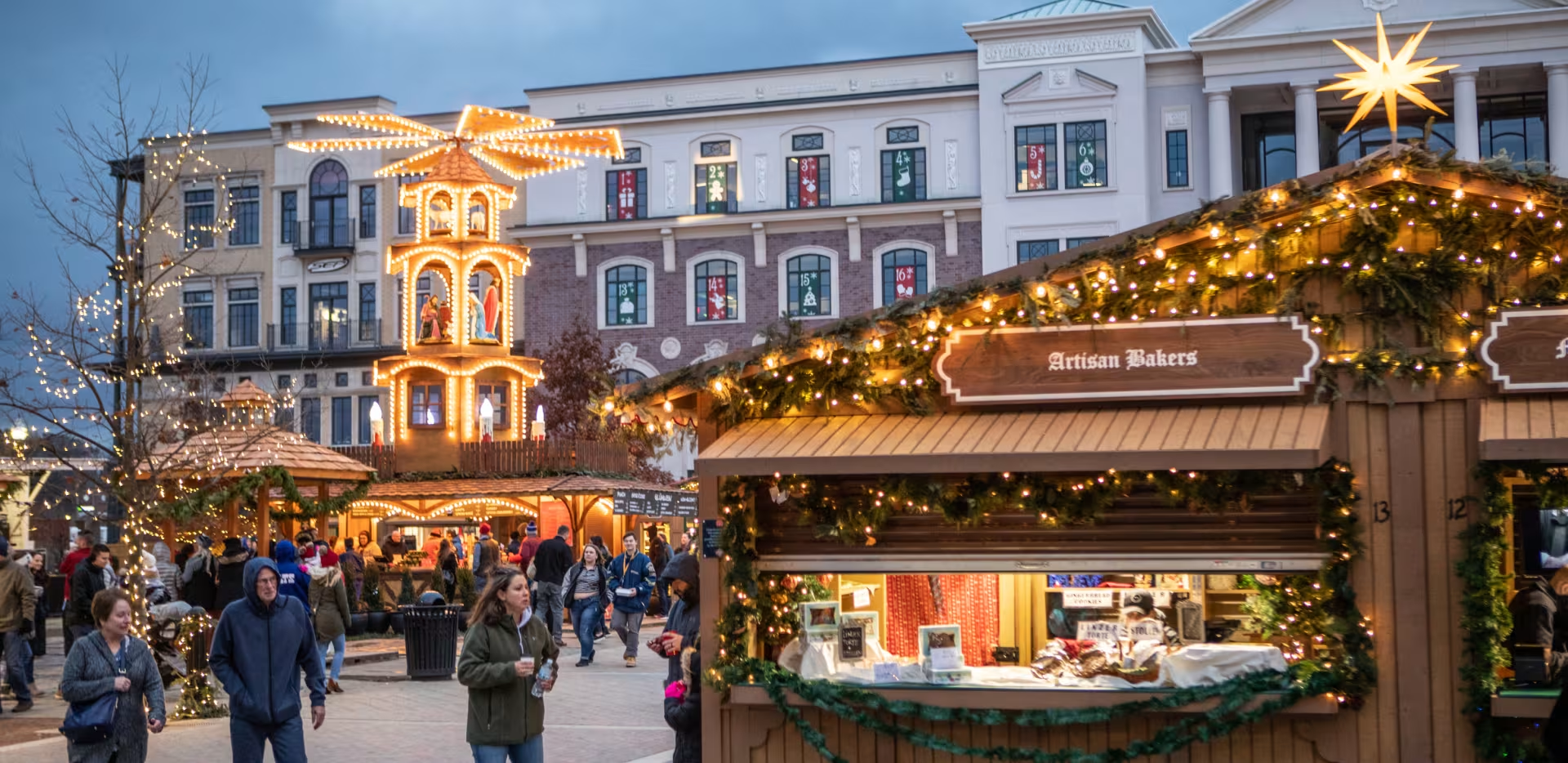
November 22 to December 24: The Carmel Christkindlmkt is open with 50 vendors, music, ice skating and just a great place to meet friends and enjoy a German-style winter/Christmas fest.  

November 24-28: No meetings or classes. Happy Thanksgiving

November 27: Thanksgiving Day: enjoy feasting, and football, friends and family!

November 28: Black Friday kicks off the Christmas shopping season. 

November 29: Small Business Saturday: shop local (although sales are already on!) 

December 1: Cyber Monday: shop for great deals on-line

Lean On Me


Conversations this week included how we rely on each other, we were reminded of this American classic. There are many great idioms. Sing along to feel the rhythm and cadence of American English.

Speak Up! Speak Out! Speak About Phrasal Verbs in English!

Directional” phrasal verbs, which include a verb plus “in, out, up, down, into, over, and on,” are usually idiomatic. They have a figurative, not a literal meaning. Here are a few of our favorites to describe emotion and relationships. Listen for them. Try them in your conversations.

Homonyms, Homographs, and Homophones—Context makes all the difference

There are three classifications of words in American English that can be misconstrued either in writing or in conversation. Context helps to get the right meaning. Below is a brief explanation.  

Homonym: Same spelling and pronunciation, but different meaning: 
  • Let’s watch a movie tonight.
  • Please set your watch for 7:00 PM.
Homograph: Same spelling, but different pronunciation and meaning:
  • She tears up her shopping receipts before she throws them away.
  • She tears up when she watches a sad movie.

Homophone: Same pronunciation, but different spelling and meaning:
  • He rode his bicycle down the road to the store.

Over 300 Homonyms, Homophones, and Homographs: A List of Easily Confused Words That Sound or Look the Same provides an explanation, examples, and exercises. Do not be intimidated! This normal for all American English Speakers. A strategy here is to find the words you usually use. Then, notice new context and concepts. 


For Here or to Go?

We had fun role playing how we might order in different restaurants. Having so many choices  about items on the menu, cooking preferences, pricing, and tips can be intimidating. Step out of your comfort zone and lean into the challenge of ordering, asking questions, and trying something new. Some helpful phrases:
  • What do you recommend?
  • Could I have a little more time to think about my order?
  • Could you read back my order (to make sure it’s correct)?

International Friends Meeting Notes

Some of our students are working out of town and cannot always make or evening meeting. We are trying setting up a concurrent Zoom to loop everyone into the meeting. Look for the e-mail. Even if you do not regularly come to this class, you are welcome to be a part of this hybrid experiment.

Join us! Click here to register.


International Bible Study: Monday, 8-9:00 PM, Zoom

We had a great discussion regarding the civil laws given to Moses for the Israelites in Exodus 21-23. God provided specific consequences for specific actions. While it was interesting to think about the situations that prompted these laws, it was also important to think about the overarching cultural situations of the Israelites as they left generations of slavery behind and faced new challenges and peoples. We used words like justice, compassion. People who broke the trust, were irresponsible (even with the behavior of their animals), planned murder, stealing, and sexual attack were met with equal punishment (criminal law). Exodus 21: 23-25 are the famous "an eye for an eye" verses that specify . These rules expose the violence and selfishness that harms individuals and damages a society and community and brings the secret to light to be dealt with by the appointed authorities.

November 17: Read Exodus 24-27 to learn more about the covenant between God and the Israelites and the building of the Ark of the Covenant and the Tabernacle.

American English and Culture: Thursday, 10:00 AM- 12:00 PM, Room 100

We covered so much ground this week. Above is a bit of the grammar content. If you are registered, you should be able review the Chat on Zoom any time. As usual, the conversation content was interesting and helped to provide the context for remembering and learning.

November 21: Join us in-person at Cornerstone Lutheran Church in room 100 to learn how to prepare a turkey and other American dishes. Bring your favorite feasting dish to share. Bring your friends and family.

Listen to the song “Lean On Me” by Bill Withers. As we gather for our Thanksgiving party next week, think about a time in your life when you had to “lean on” someone. Be ready to tell your story as we gather for good food with gratitude.


American English and Culture: Thursday, 7-8:30 PM, CLC, Carmel, Room 100


We had great conversations in both our Thursday classes that led to understanding grammar and common American English usage. Check our boards for the notes. We started looking at prefixes and suffixes.


November 21: Join us in-person at Cornerstone Lutheran Church in room 100 to learn how to prepare a turkey and other American dishes. Bring your favorite feasting dish to share. Bring your friends and family.

American English for Kids: Thursday, 6:00-6:30 PM, private Zoom

Our Friend had a work experience this week in agriculture. We learned about farming in Japan. It is different than farming in the United States. We found out that in order to graduate with an agricultural degree, our Friend's host had to write in English!

November 21: Write a couple of paragraphs telling about Japanese agriculture. This is not a research project, but a reflection or opinion piece.

Words and Phrases and Resources

and: a little word used to connect two ideas or items in a list; (a conjunction) whether a comma is used before "and" depends on a number of factors: 
  • If the two items intended to be considered as one item (I like fish and chips, pizza, and spaghetti and meatballs.).
  • If there are only two items in the list (I like cats and dogs.)
  • If the regional practice is to use a comma before the "and" when listing (I like daisies, carnations, and petunias.                                                      Click here to grammar geek out and learn more.
civil laws: rules that are enforced by government that protect the private rights of people (citizens)
criminal law: rules that are enforced by the government to deter and/or punish offenders 
misconstrued: misinterpret words or actions
overarching: comprehensive, all embracing
pitch-in: when everyone brings one dish or 
piece: written or musical projects or creations are often called pieces
rely: depend, look to someone for support
role playing: practice dialogues; we do them off the cuff!
traveling over: taking a trip during a specific time

Saturday, November 8, 2025

First Snow and Alot of Hard Work

 Click here to go to our website.

Hello, Friends.

There are places in Indiana that are getting snow tonight. It is November, and that really is not too early for snow here in the Midwest. Bundle up! Enjoy the beautiful fluff.

Fall Foliage Field Trips, and Feasting:

November Calendar with International Friends

November 20: International Friends Feasts: bring your favorite feasting dish to share. Learn to prepare a turkey and other traditional mid-western dishes. Then let's feast!

November 22 to December 24: The Carmel Christkindlmkt is open with 50 vendors, music, ice skating and just a great place to meet friends and enjoy a German-style winter/Christmas fest. 


November 24-28: No meetings or classes. Happy Thanksgiving

November 27: Thanksgiving Day

November 28: Black Friday kicks off the Christmas shopping season. 

Understanding the Basics

Vocabulary or words and phrases (words that when combined have a unique meaning, but when broken apart do not make much sense) and grammar are the building blocks of language. Every time you run across something new, pay attention what it is and to how it is being used.

  • Personal usage: Words and phrases, and habits that are particular and unique to a person. Pay attention to understand and relate to that person. Listen to learn how to best relate to them. 
  • Common usage: Words and phrases and grammatical structure that are used in daily language and are widely usual and understood by most people (think broadcasters). 
  • Cultural usage: Words and phrases and grammatical structure that may not follow the norms.

These categories may overlap, but American English is not cut and dried (simple). Context matters. Pay attention to levels of formality to meet the expectations of the people around you and to be understood. 

Don't Be Afraid: Some Tips from This Week


Expressing Fear or Concern: I’m afraid for concern or worry about others vs I’m afraid of which is personal fear or worry. Examples:

  • I’m afraid of spiders. I’m afraid of flying.
  • I’m afraid for my children every time they step out the door.
  • I’m worried about you driving in the blizzard.
  • I’m concerned about your trip.
  • I'm afraid of the dark.

Use "afraid" to soften a refusal or apology: I’m afraid I can’t attend your party. I’m afraid I broke your favorite coffee cup.


Asking for help: Could you do me a favor?


Borrow=take vs lend=give


May I borrow the book from you? Could you lend me the book?


Personal Business:


You may borrow money from a bank for a car loan, a mortgage loan for a house, a home improvement loan, an educational loan, or a personal loan. A bank is a lender. You will be charged interest if you take a loan from the bank. ALWAYS ask about the interest rate and read the fine print—the terms and agreements—even if they are “boilerplate” or “standard.”


Legal Language or Legalese:


  • Request documents to be translated into your own language.
  • Make an informed decision.
  • Appoint a Personal Health Care Representative.
  • Make out a will.
  • Create a living will.
  • Appoint a Trustee.
  • Assign Power of Attorney.
  • Assign custody of minor children.
  • Sign a waiver to release others from legal accountability.
  • Sign medical release forms.
  • Always keep a copy.
  • Store documents in a safe place.
  • Keep documents up-to-date.

International Friends Meeting Notes

Some of our students are working out of town and cannot always make or evening meeting. We are trying setting up a concurrent Zoom to loop everyone into the meeting. Look for the e-mail. Even if you do not regularly come to this class, you are welcome to be a part of this hybrid experiment.

Join us! Click here to register.

International Bible Study: Monday, 8-9:00 PM, Zoom

We wrapped up the 10 Commandments all of which deal with our relationships between ourselves and others. In heeding these commandments, we 

November 10: We are discussing Exodus 21-23 read the chapters and find your favorite rules!

American English and Culture: Thursday, 9-11:00 AM, Zoom 

As usual, we covered a lot of ground in class. Not to make a to-do about it, but making a difference between doing something can be huge. Make a “to-do” list to help you learn American English! 


These two words begin many phrasal verbs and idioms in English. We make “things.” Use “made” for general cooking unless the manner of cooking is important. Some additional phrases: make a point, make a noise, make something for someone, make to order, make an appointment, make a mistake, make a friend. We do “activities”: exercises, chores, laundry, cleaning, dishes, presentations. Use “do” for personal hygiene and style: do your hair, make up, nails. Sometimes we do something ourselves. Other times we have someone else do something for us: “I was supposed to get my hair done once a month. She had her nails done yesterday.” Others phrases you should know: Can you do me a favor?  and “What do you do (for a living)?” Answer with your job title or description: “I’m a customer service manager.”


The sounds of the day were /ng/ and /nk/:


Rhyming words and silly sentences can help you practice specific sounds.  Example: They went singing and swinging through the grass in the springtime. We DO NOT hear a “hard /g/” in this sound. Listen for the same sound at the end of progressive verbs: I was gardening and cooking this afternoon. We also hear this sound at end of gerunds: Reading and writing are my favorite hobbies. Be careful not to confuse /ng/ with /nk/ as in “Drink the pink juice by the sink.” We DO hear the /k/ at the end of the word. Make some silly sentences of your own to practice challenging sounds.


November 13: Choose a favorite food or dish that you like to order in a restaurant. Practice how you would place your order in English. Then explain to us how you might say it differently in your home language. Would you use specific terms for food preparation?


November 21: Join us in-person at Cornerstone Lutheran Church in room 100 to learn how to prepare a turkey and other American dishes. Bring your favorite feasting dish to share.


American English and Culture: Thursday, 7-8:30 PM, CLC, Carmel, room 100

As we apply teamwork to tackling topics and tasks in English (vocabulary, idioms, pronunciation, grammar, usage, culture), we touch on key points and make the most of our time. Our classes are not about perfection or performance; they are about being partners in learning.  Set some reachable goals for yourself. Focus on one or two items from a lesson to review and apply in your daily life each week. Check them off as you master them to build your confidence.

November 13: Choose a favorite food or dish that you like to order in a restaurant. Practice how you would place your order in English. Then explain to us how you might say it differently in your home language. Would you use specific terms for food preparation?

November 21: We will meet to learn to make some common American Thanksgiving dishes and to feast. Bring your favorite feasting dish to share. Family is welcome.

American English for Kids: Thursday, 6:00-6:30 PM, private Zoom

American Thanksgiving is a unique festival in that it not only celebrates fall harvests. It celebrates the hospitality that the Wampanoag showed to the Pilgrims that helped these settlers survive. We chatted about that during a Zoom road trip.

November 22: What happened this week?

Words and Phrases and Resources

heeding: paying attention and applying advice
hybrid: a combination of two things
make a to-do: a fuss
norms: expectations for behavior in society
Wampanoag: the tribe of people in the pilgrim story